Automatic translation of the archived Russian text. Recordings and text within images remain in their original language. Read the Russian original
About this material
How narrative elements can serve a game’s commercial goals by helping people understand it and sustaining interest, discussion and community. Storytelling is treated as a shared part of development and play, rather than an isolated writing task.
There has been a lot of discussion lately about the role of narrative in the Russian games industry. Everyone is writing such interesting things that I felt like adding my own thoughts. To be clear, I do not write scripts, but I have plenty of experience working on games both with and without stories.
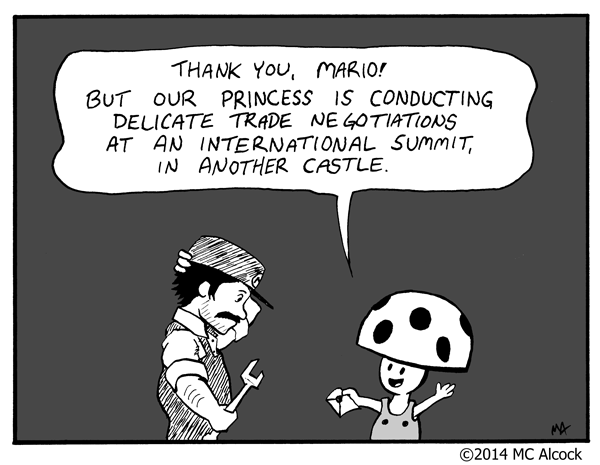
First, a little terminology to get us on the same page. Take a red square: it is just a square. But add eyes, and it becomes a character—that is, a narrative element. Or take a game in which you have to cross N levels from one end to the other. Sounds boring and mechanical? Let us say the player is running to rescue a princess. We have added narrative elements again. By narrative I mean the sum of a game’s narrative elements. Think of the relationship between music and the sounds it consists of. Plot is one of those sounds. It is not essential for music to exist, but when narrative elements are present, they usually end up forming some kind of simple story.
Let us get to the point. Making a game can begin for different reasons. It might begin with a desire to tell a story, which becomes the backbone of the entire development process. Or it might start with the simple, understandable wish to make money, which can also be that backbone. But having a central purpose does not prevent a game from combining self-expression through story with a focus on the market. I am not about to reveal any secret techniques. I simply want to organize these ideas. Perhaps it will help someone rethink their priorities and make a little more cash, opening up opportunities to experiment with new forms. It is fairly obvious that people buy pure stories only as books. Nobody makes purchases in an f2p game solely to get a little more plot. There are no examples of that on the market. At most, there are purchases of chapters in a series, which provide not just plot but also some gameplay time. So I will begin with a simple rule: plot and other forms of narrative are tools, not ends in themselves. I distinguish the following parts of the player experience in which narrative elements can improve conversions and therefore profits: acquisition, onboarding, conversion into a regular player, retention, and building a community around the game. This is not just about f2p games. Conversions matter for paid games too, from a player arriving at the purchase page to leaving a rating after finishing the game.
Acquisition
The player’s journey begins when they are not yet a player at all, just someone passing by who happens to hear about your game through some information channel. At that moment, something needs to catch their attention and make them want to learn more.
Suppose you are an unknown developer making yet another match-three game. Being unknown in a genre flooded with slapdash products is unlikely to grab a passer-by. Good graphics and fresh features, however, might. But more hooks are better than fewer. Wrap every mechanical element in narrative and say you now have time-travelling orcs in World War II, and you may attract more new players to your game.
In my view, narrative elements in marketing materials provide two hooks:
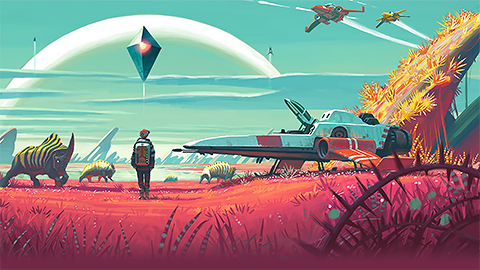
The promise of an interesting, unique experience: controlling a city flying through space, managing the mines of the Lonely Mountain, working as a firefighter on Mars, or going on dates in Ancient Rome.
The promise of a story. Although I said above that people do not buy pure stories, a story can be a very welcome extra. For example, you would probably not swap Half-Life 2 for an adventure game with the same story. But given a choice between an abstract shooter and a shooter with a story, the choice is obvious. Somewhere deep down, people love stories, listening to fairy tales and telling tall tales. There are many reasons, but the main one is “story = emotional roller coaster.” That is why storytelling exists outside game development too: turning ordinary information into stories, because stories are easier to absorb. If you are giving a lecture somewhere, think about presenting it as a story.
For a game launching on Steam without much hype, it is crucial to use the million impressions the platform provides at release effectively, so it can break into the popular new releases and keep generating purchases.
Onboarding
Every game consists of rules, and the player needs to know them to play and get their share of fun. It is convenient when a game follows established industry patterns and the player already knows its main mechanics—in other words, a clone. But we must still assume some players will need every detail explained. Meanwhile, they do not want to figure anything out; they want to enjoy playing immediately. Solving this problem is a science in itself. I will focus only on the places where narrative helps.
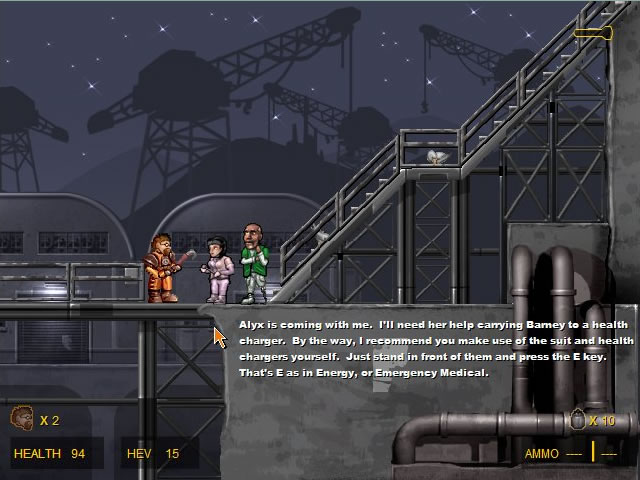
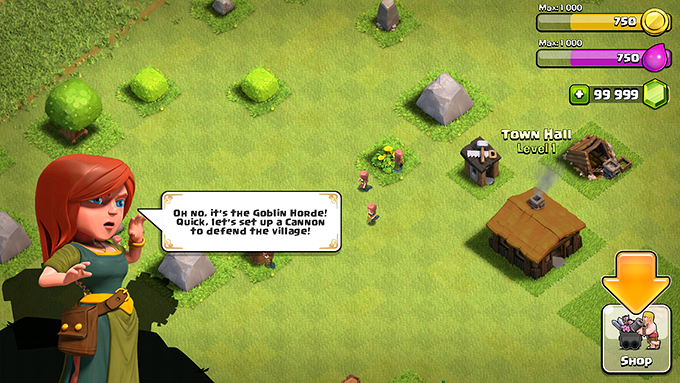
Humans are pattern-finding machines, particularly when it comes to recognizing faces. So if a face appears in your complicated interface full of buttons and numbers, it immediately attracts attention. And a face means a character. The more developed that character is, the more interest people will have in them and what they say. A character’s conversational speech is also easier to read than bureaucratic system messages. But if it is merely a picture of a woman with big breasts, it will soon be blacklisted by the player’s built-in spam filter for failing to meet expectations.
2. You can spread out the teaching of game mechanics by letting the player play through a story in the meantime. Teach the player to walk and talk, and they can entertain themselves with narrative elements for a while, without straining their brain over the game’s other twenty-plus incomprehensible mechanics.
Conversion into a regular player
Just because a player has arrived and figured out how to play does not mean they will not leave early. Anyone who has seen mobile or online game metrics, or completion achievement statistics, knows how enormous the drop-off is during the first minutes, hours, and days. It is not just about teaching; it is about giving the player a reason to stay longer. Put simply, the player asks two questions here: 1) What do I do here? 2) Am I interested? Narrative offers the following answers:
Engaging with narrative elements: exploring the world, talking to characters, taking part in the plot and smaller stories—quests.
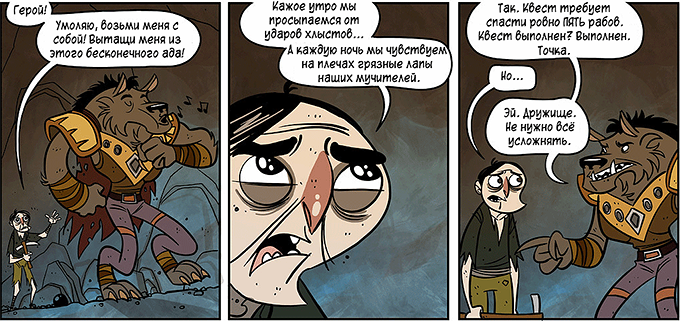
Interest in narrative elements is proportional to their quality and uniqueness. A quest asking you to bring twenty wood and ten bricks to receive five berries is utterly boring and artificial. But if the quest is about hunting a mysterious collector of rare berries, for whom we must prepare an ambush, it starts to spark a little interest.
The key is moderation. If you drench the player in rich narrative at the beginning and then abruptly take it away, they may leave. More generally, pretending to be a different game at the beginning is a harmful practice: it interferes with learning and misleads the player.
I almost forgot: lore, and the way it is presented, also helps the player believe in the game world. In other words, it creates immersion, an excellent lubricant for onboarding and retention. Once again, though, having lore is only half the job. You still need to present it, even through hints and fragments of dialogue.
Retention
Even if a player has made it through the initial funnel and been firmly engaged for a week, we continue to watch them closely. In a single-player game, we want them to reach the end, with the climax, resolution, and all the rest. In an online game, we want them to stay long enough for their LTV to exceed the acquisition cost. This is simple: a plot gives the player medium-term goals—complete a quest, help an NPC, finish an arc—and long-term goals—finish the story. Unfinished goals are one of the main tools for bringing players back. Of course, it is better not to rely solely on plot, but to surround the player with additional return mechanics. Yet if the game is already full of mechanics, adding story goals will strengthen them and help sweep artificial gameplay conventions under the rug.
And for dessert, the best part: building a fan base. We all want users not only to play and bring in money, but also to bring friends, leave positive reviews, come to our next projects, help newcomers on forums, create viral content, and improve our reputation. All of this is much easier for players if:
The game is easy to talk about. Rather than “well, those guys do something to those other guys,” people can tell a coherent story about factions, their motivations, characters, wow moments, and so on.
The game has rich lore that people can discuss at length.
The game has vivid characters whom people care about and can make fan art of.
The game poses unanswered questions. What happened in the world of Inside before the player arrived? What happened off-screen during The Final Station? What are the G-Man’s real goals? These are all excellent reasons to keep talking to other players after the game and build a community.
The player has experienced catharsis. I cannot imagine this happening without narrative elements, although it is not an easy task even with them.
That concludes my introductory tour of the financial optimization of narrative elements. Now you know what affects your project’s metrics, what is missing, and what seems to be present but has no effect on the game’s commercial success. I am sure there are more examples of narrative influencing conversions. Perhaps someone can suggest a valid example of using narrative to lead a player to their first purchase. The comments are open to everyone. Above all, remember that working with narrative is a task for the entire development team, not for a separately hired specialist.